Catamaran or sailing yacht? How to choose for your charter
Space, stability, sailing feel, mooring and cost: an honest comparison of catamarans and monohull sailing yachts to help you pick the right boat.
By Sailcorner editorialUpdated 3 min read
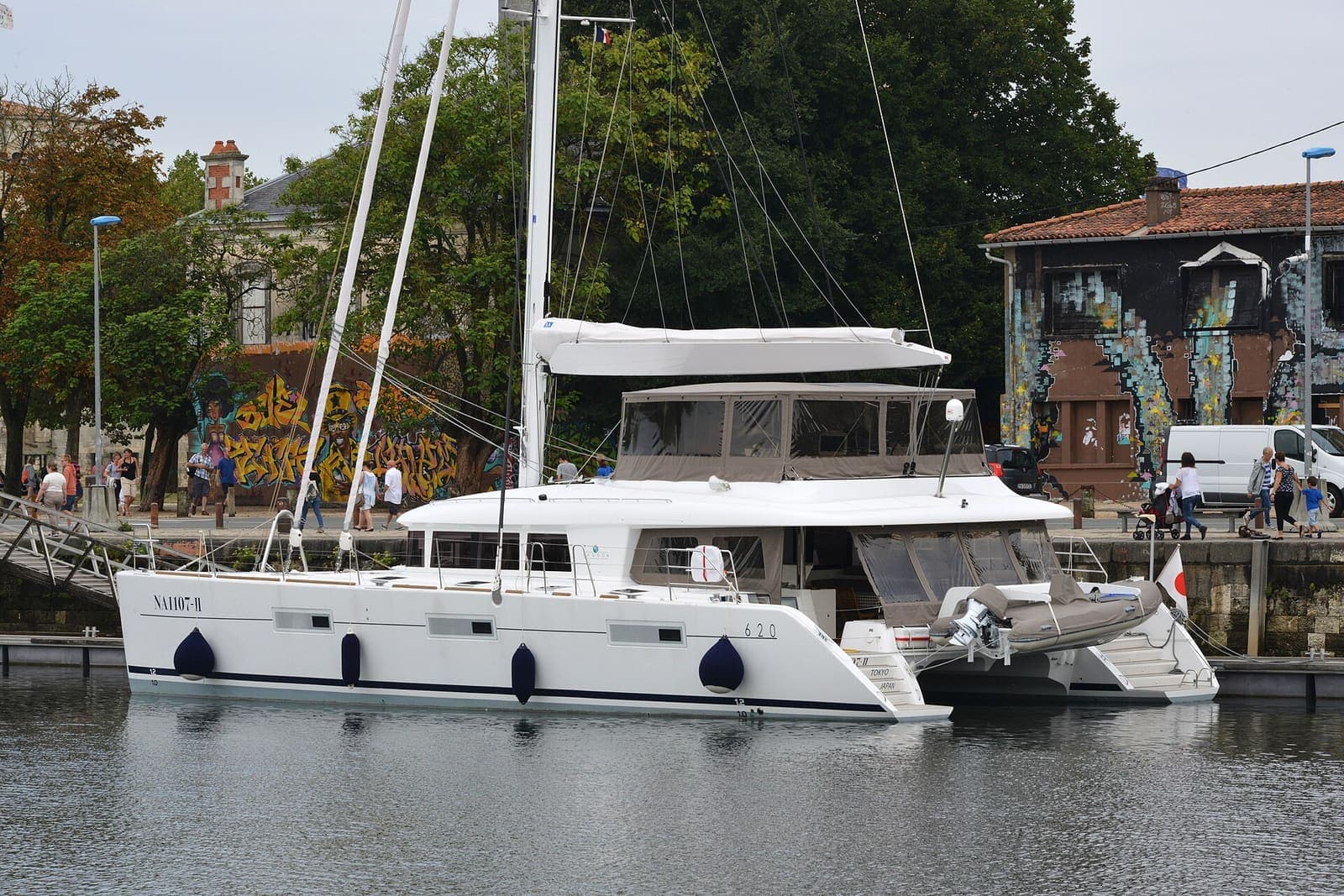
It is the first big decision on most charters, and both answers can be right. A catamaran is a floating holiday apartment. A monohull sailing yacht is the more traditional way to sail. Here is how they really differ, and which one suits different crews.
Side by side
| Aspect | Catamaran | Sailing yacht (monohull) |
|---|---|---|
| Living space | Large saloon and cockpit on one level, plus a big foredeck with nets | Saloon below deck, cockpit outside; more compact overall |
| Stability | Sails almost flat and rolls far less at anchor | Heels under sail and rolls more in swell at anchor |
| Privacy | Cabins split between two hulls, often each with its own head | Cabins forward and aft, usually sharing fewer heads |
| Draft | Shallow, often around 1.1–1.5 m, so you can anchor closer to the beach | Deeper keel, often around 1.9–2.4 m |
| Sailing feel | Steady and comfortable; points less high into the wind | More responsive and rewarding; sails closer to the wind |
| Manoeuvring | Two engines make it easier to turn in tight spaces | One engine, more affected by wind and prop walk when berthing |
| Cost | Usually more per week, and some marinas charge more for the extra width | Usually cheaper to charter and to berth |
- Living space
- Catamaran: Large saloon and cockpit on one level, plus a big foredeck with nets
- Sailing yacht (monohull): Saloon below deck, cockpit outside; more compact overall
- Stability
- Catamaran: Sails almost flat and rolls far less at anchor
- Sailing yacht (monohull): Heels under sail and rolls more in swell at anchor
- Privacy
- Catamaran: Cabins split between two hulls, often each with its own head
- Sailing yacht (monohull): Cabins forward and aft, usually sharing fewer heads
- Draft
- Catamaran: Shallow, often around 1.1–1.5 m, so you can anchor closer to the beach
- Sailing yacht (monohull): Deeper keel, often around 1.9–2.4 m
- Sailing feel
- Catamaran: Steady and comfortable; points less high into the wind
- Sailing yacht (monohull): More responsive and rewarding; sails closer to the wind
- Manoeuvring
- Catamaran: Two engines make it easier to turn in tight spaces
- Sailing yacht (monohull): One engine, more affected by wind and prop walk when berthing
- Cost
- Catamaran: Usually more per week, and some marinas charge more for the extra width
- Sailing yacht (monohull): Usually cheaper to charter and to berth
How a typical 40–46 ft catamaran compares with a monohull of similar length
Choose a catamaran if…
- You are sailing with children, older relatives or anyone prone to seasickness. Less heel and roll makes a real difference.
- Two or more couples or families are sharing. Cabins in separate hulls give everyone more privacy.
- You plan to spend more time at anchor than on long passages. The cockpit, trampolines and wide swim platforms are made for it.
- Your destination has shallow anchorages, as in the Caribbean, or you want to anchor close to beaches.
Choose a sailing yacht if…
- Sailing is the point of the holiday. A monohull is more responsive and better upwind, and it is more satisfying to trim.
- You are watching the budget. For the same number of cabins, a monohull is usually the cheaper option, in weekly price and in marina fees.
- You expect stronger winds or longer open-water legs, such as the Cyclades in summer, and want a boat that feels at home in them.
- You are building experience towards skippering your own charters. Most sailing schools teach on monohulls.
Other options worth a look
A power catamaran has the space of a sailing cat with no rig to handle, and cruises faster between islands. A gulet is a traditional wooden yacht from Turkey and parts of Croatia, chartered with crew, and suits groups who want to relax rather than sail. For speed and day trips, look at motor yachts.
Licences and skippers
The licence rules are the same for both: a bareboat charter needs a skipper with a recognised sailing licence, and usually a VHF certificate. Some operators ask for proof of catamaran experience before handing over a large cat. If you are moving from monohulls, say so when you request a booking. A skipper for the first day or two is an easy way to learn the boat.
Still undecided?
Search your destination and dates with both types selected, then compare the weekly price per cabin. If the difference is small, most mixed crews are happier on a catamaran. If sailing matters most, take the monohull and spend the savings ashore. Our yacht types overview shows typical sizes and how many of each are listed.
Compare both on your dates
Filter by type, cabins and price across every destination we list.