Greece island-hopping by yacht: Ionian, Saronic or Cyclades?
How Greece's main sailing areas differ in wind, distances and experience needed, with a sample week for each and advice on the summer meltemi.
By Sailcorner editorialUpdated 3 min read
Greece has more sailing areas than any other Mediterranean country, and they feel very different on the water. The right choice depends less on which islands look best in photos and more on the wind your crew is comfortable with. This guide compares the three most popular areas and suggests a realistic week in each.
The three areas at a glance
- Ionian Islands (west coast): gentle mornings, moderate afternoon breezes and green islands close together. The easiest choice for a first charter.
- Saronic Gulf (near Athens): short passages and easy logistics, with Athens airport close to the bases. Good for a first week in Greece, but busy at weekends in summer.
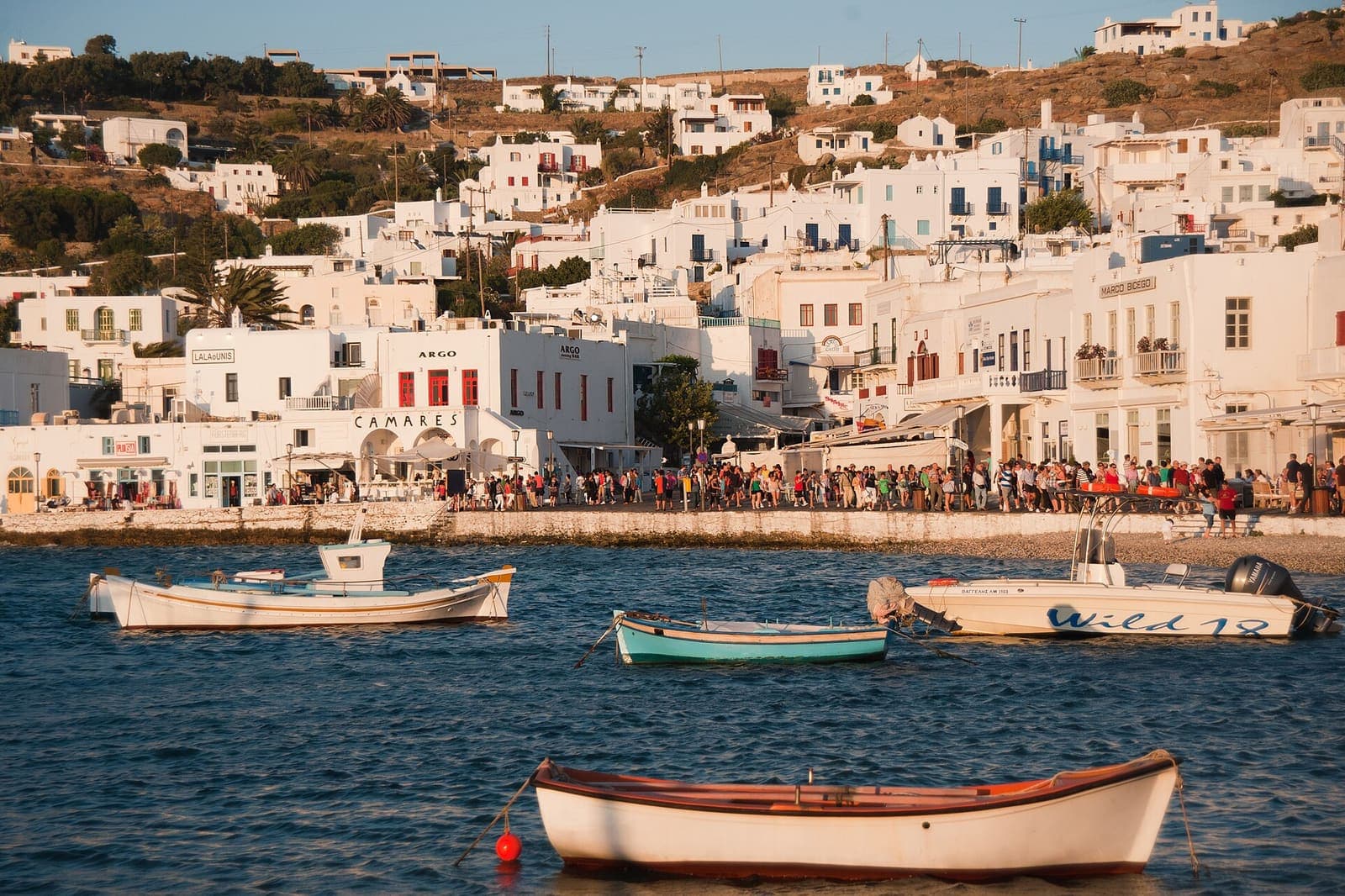
- Cyclades (central Aegean): iconic white villages, longer open-water legs and the meltemi. Best for experienced crews, or in the shoulder season.
The Ionian: relaxed sailing among green islands
In the Ionian, mornings are often calm and a north-westerly breeze fills in after lunch, usually moderate in strength. Islands sit a few hours apart, so you can motor in the morning, sail in the afternoon and be at anchor well before dinner. Lefkada and Corfu are the main charter bases.
- 1
Days 1–2: Lefkada to Meganisi
Start with a short hop to the deep, sheltered bays of Meganisi, where several tavernas have their own jetties.
- 2
Days 3–4: Kalamos, Kastos and Ithaca
Cross to quiet Kalamos and Kastos, then on to Kioni or Vathy on Ithaca. The harbours are small, so arrive in good time.
- 3
Days 5–6: Fiskardo, Kefalonia
Fiskardo is pretty and popular. Many crews anchor in the nearby bays and take the dinghy into town for dinner.
- 4
Day 7: Back via Sivota
Stop in Sivota on Lefkada's south coast before the short run back to base.
Browse yachts based in the Ionian Islands.
The Saronic Gulf: short hops from Athens
Bases on the Athens Riviera put you within a day's sail of Aegina, Poros, Hydra and Spetses. Legs are short and there are plenty of harbours to choose from if the weather changes. The trade-off is traffic: Hydra's small harbour is very crowded in high summer, and Athenians sail here at weekends too.
The Cyclades and the meltemi
The meltemi is a dry northerly wind that blows across the Aegean in summer. It is strongest and most persistent in July and August, when it can reach force 6 to 7 for several days and sometimes more, with a short, steep sea between the islands. Distances in the Cyclades are also longer, and many anchorages are open to the north.
- Sail in May, June or September if you want the Cyclades with gentler conditions and fewer people.
- In high summer, plan your route so the strongest legs run south with the wind, and keep spare days for waiting out a blow in port.
- Reef early. Gusts can be much stronger in the lee of high islands and through the channels between them.
- If nobody aboard has sailed in strong wind before, book a skipper. They know the local harbours and when it is better to stay put.
Popular starting points include Athens and the islands of Paros and Mykonos. Browse yachts in the Cyclades.
Practicalities for any Greek charter
- Bareboat skippers need a recognised sailing licence, and a second crew member with sailing experience is usually required. A VHF certificate is expected too.
- Greece charges a cruising tax on charter yachts. The operator handles it, and it is often included in the price or listed as a mandatory extra. Check the yacht page.
- Stern-to mooring with your own anchor is standard in Greek harbours. Practise it on day one, ideally in a quiet harbour.
- Water and electricity on town quays are often sold by a local attendant. Keep some cash on board.
Start planning your Greek week
Compare sailing yachts and catamarans across the Ionian, the Saronic Gulf, the Cyclades and the Dodecanese.